
Cloud Security Testing

Cloud Security Testing


With the rapid adoption of cloud computing, organizations are increasingly relying on cloud platforms to store data, run applications, and manage operations. While the cloud offers scalability, flexibility, and cost efficiency, it also introduces new security challenges such as misconfigurations, unauthorized access, and data exposure.

Cloud Security Testing is a comprehensive process of evaluating cloud environments to identify vulnerabilities, misconfigurations, and security risks. It ensures that cloud infrastructure, applications, and data are protected against cyber threats.

By proactively testing cloud environments, businesses can strengthen security, maintain compliance, and safeguard sensitive information.
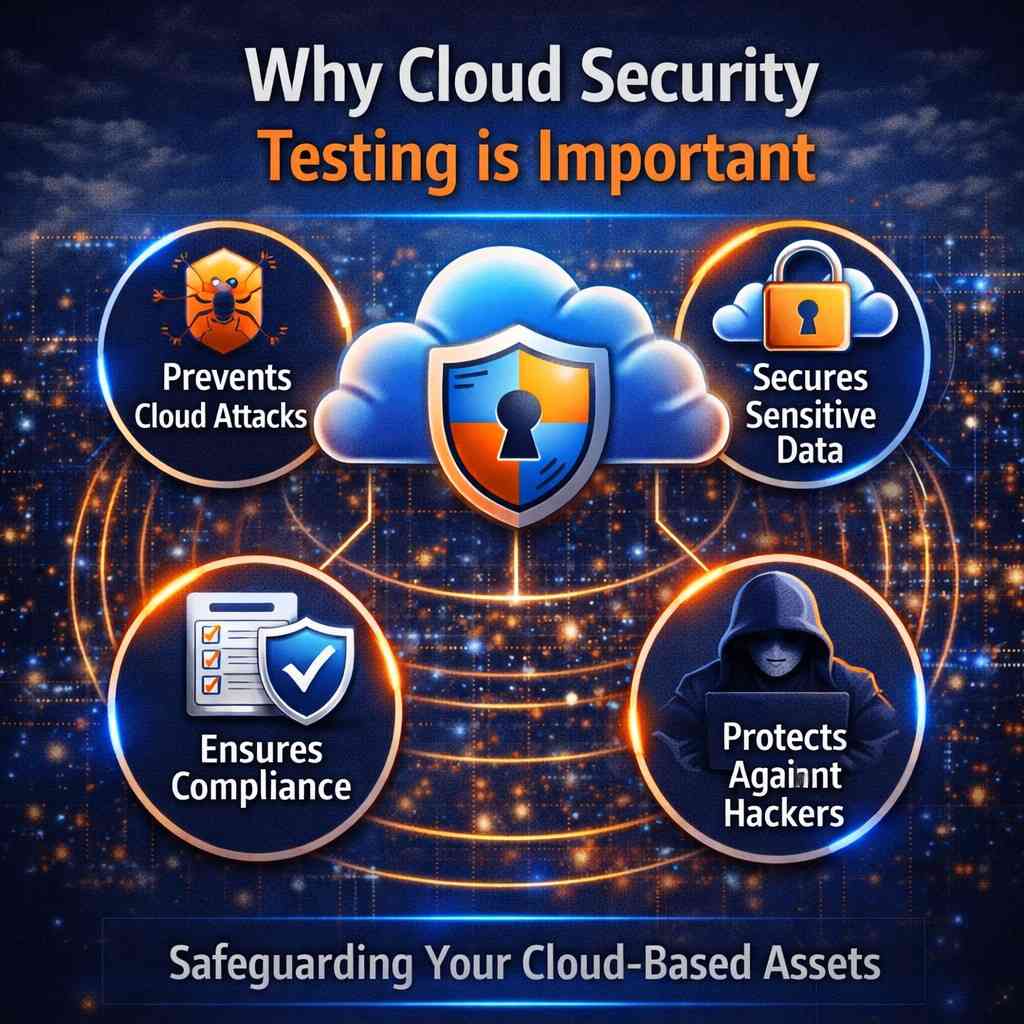

Why Cloud Security Testing is Important


Cloud environments are complex and often shared across multiple users and services, making them vulnerable to various threats.

Cloud security testing is important because it:

  • Identifies vulnerabilities and misconfigurations early
  • Prevents data breaches and unauthorized access
  • Ensures compliance with regulatory standards
  • Protects sensitive business and customer data
  • Strengthens overall cloud security posture

Testing helps organizations detect and fix issues before attackers exploit them, reducing the risk of financial and reputational damage.

Why Cloud Security Testing is Important
Benefits of Cloud Security Testing

Benefits of Cloud Security Testing


Implementing cloud security testing provides multiple advantages:

  • Early detection of vulnerabilities
  • Reduced risk of data breaches
  • Improved compliance with regulations
  • Enhanced visibility into cloud environment
  • Better security posture and risk management
  • Increased customer trust and confidence

Testing ensures cloud environments remain secure, optimized, and compliant.

Frequently Asked Questions (FAQs)

It is the process of identifying and fixing vulnerabilities in cloud infrastructure and applications.

It helps prevent data breaches, ensures compliance, and protects sensitive data.

Misconfigurations, weak access controls, insecure APIs, and data exposure.

Regularly—especially after updates or major changes.

Yes, it helps meet regulatory and industry standards.