
Mobile Application Security Testing Services

Mobile Application Security Testing Services


Mobile applications have become essential for businesses, enabling users to access services anytime and anywhere. From banking and healthcare to e-commerce and social platforms, mobile apps handle vast amounts of sensitive data. This makes them a prime target for cyberattacks.

Mobile Application Security Testing is a comprehensive process used to identify vulnerabilities, misconfigurations, and security flaws in mobile apps. It ensures that applications are secure, reliable, and protected against threats such as data breaches, unauthorized access, and malware attacks.

By implementing robust security testing, organizations can safeguard user data and maintain trust.

Why Mobile Application Security Testing is Important


Mobile apps are widely used for sensitive operations, making them attractive targets for hackers. Without proper security testing, vulnerabilities can be exploited, leading to serious consequences.

Mobile app security testing is important because it:

  • Detects vulnerabilities before attackers exploit them
  • Prevents data breaches and unauthorized access
  • Protects sensitive user and financial data
  • Ensures compliance with regulatory standards
  • Strengthens overall application security

Security testing helps organizations proactively manage risks instead of reacting to incidents.

Why Mobile Application Security Testing is Important
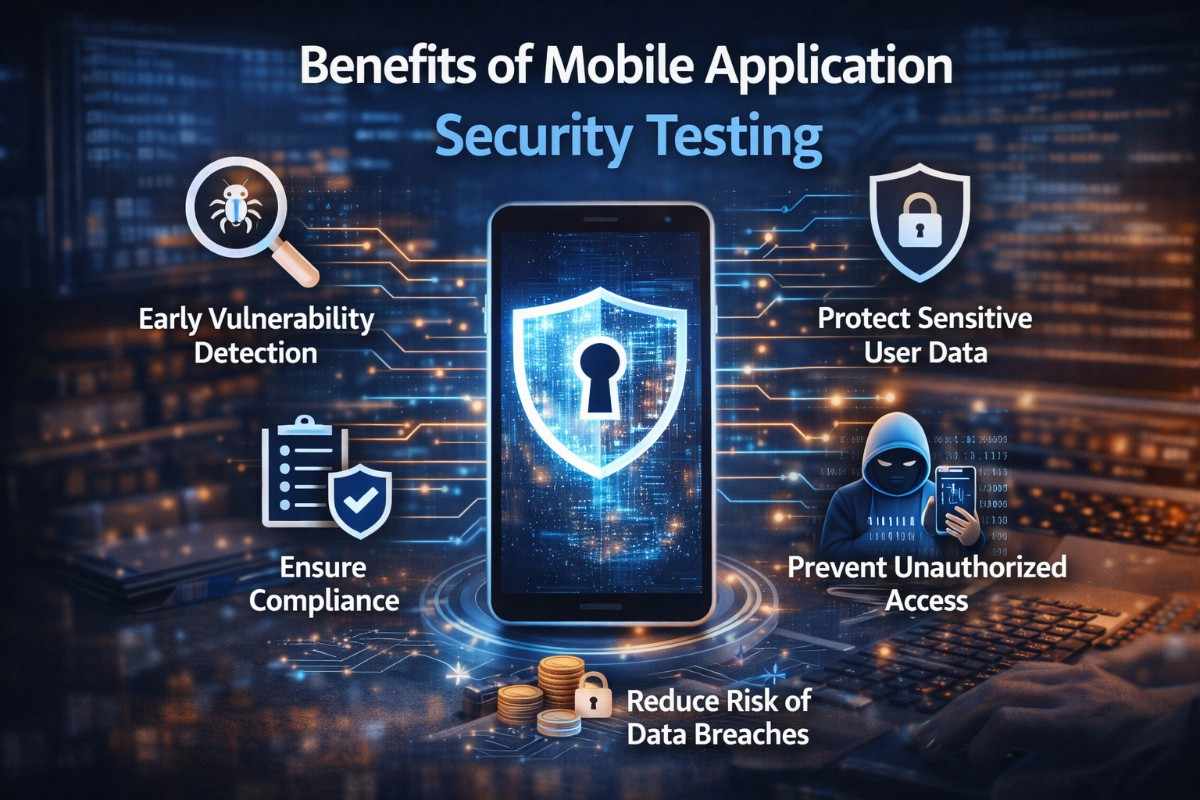
Benefits of Mobile Application Security Testing

Benefits of Mobile Application Security Testing


Implementing mobile app security testing provides several advantages:

  • Early detection of vulnerabilities
  • Reduced risk of data breaches
  • Improved compliance with regulations
  • Enhanced user trust and confidence
  • Better application performance and reliability
  • Stronger overall cybersecurity posture

Regular testing helps organizations build secure and resilient mobile applications.

Frequently Asked Questions (FAQs)

It is the process of identifying and fixing vulnerabilities in mobile apps to protect against cyber threats.

It prevents data breaches, ensures compliance, and protects sensitive user data.

Insecure data storage, weak authentication, improper encryption, and API vulnerabilities.

Regularly—especially before releases and after updates.

Automated scanners, penetration testing tools, and manual testing techniques.