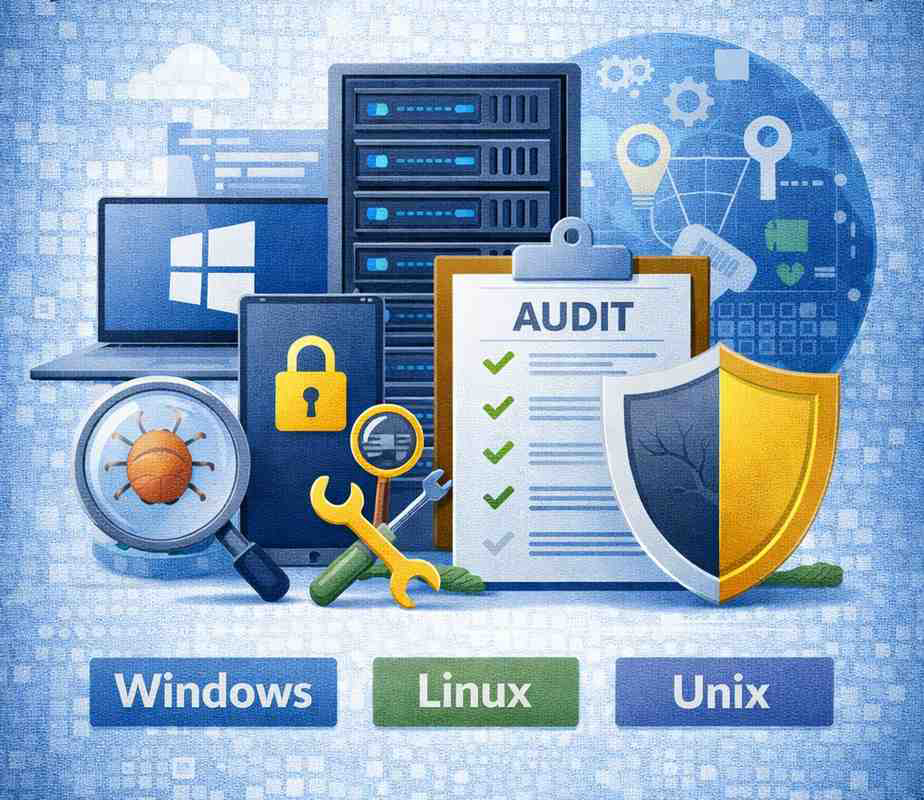
Operating System Audit

Operating System Audit


Operating systems form the backbone of every IT infrastructure, managing hardware resources, applications, and user access. Any vulnerability at the operating system level can expose the entire environment to cyber threats, unauthorized access, and system failures.

An Operating System Audit is a comprehensive evaluation of an organization’s OS environment—such as Windows, Linux, or Unix—to assess security configurations, system controls, and compliance with best practices. It ensures that operating systems are properly configured, patched, and protected against potential threats.

This audit plays a critical role in strengthening system security and maintaining the confidentiality, integrity, and availability (CIA) of data and resources.
Why Operating System Audit is Important


Operating systems are prime targets for cyberattacks due to their central role in managing system resources and access.

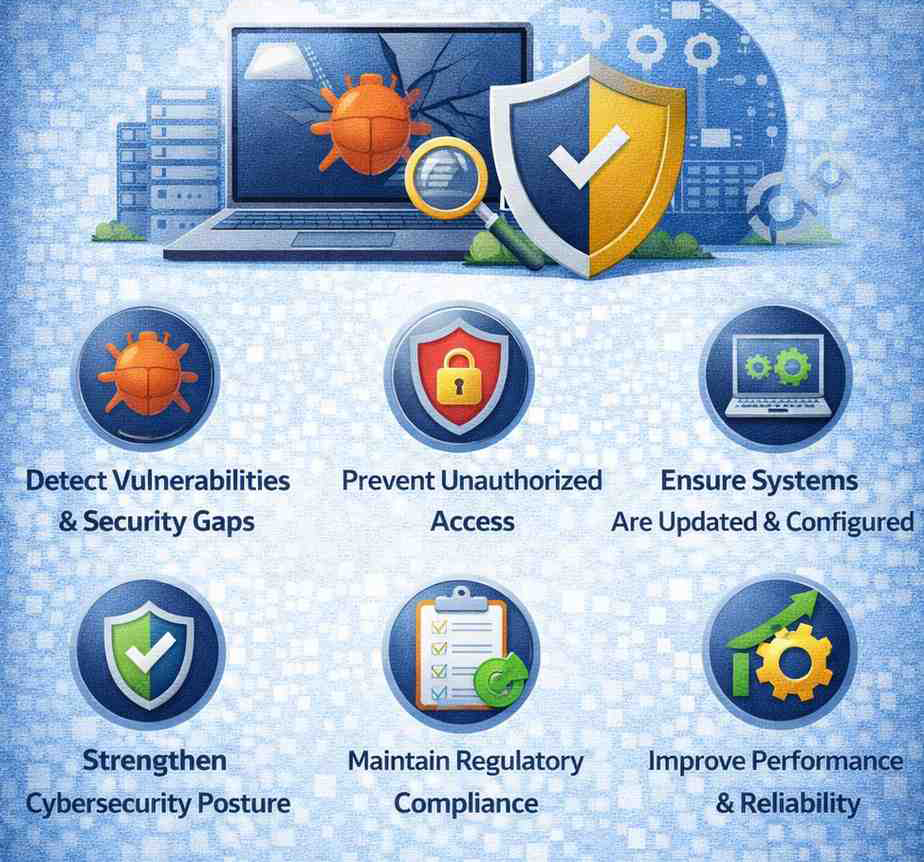
An OS audit helps organizations:

  • Detect vulnerabilities and security gaps
  • Prevent unauthorized access and privilege misuse
  • Ensure systems are properly configured and updated
  • Strengthen overall cybersecurity posture
  • Maintain compliance with regulatory standards
  • Improve system performance and reliability

Auditing ensures that security controls are effective and aligned with organizational policies and industry standards.

Operating System Audit

Benefits of Operating System Audit


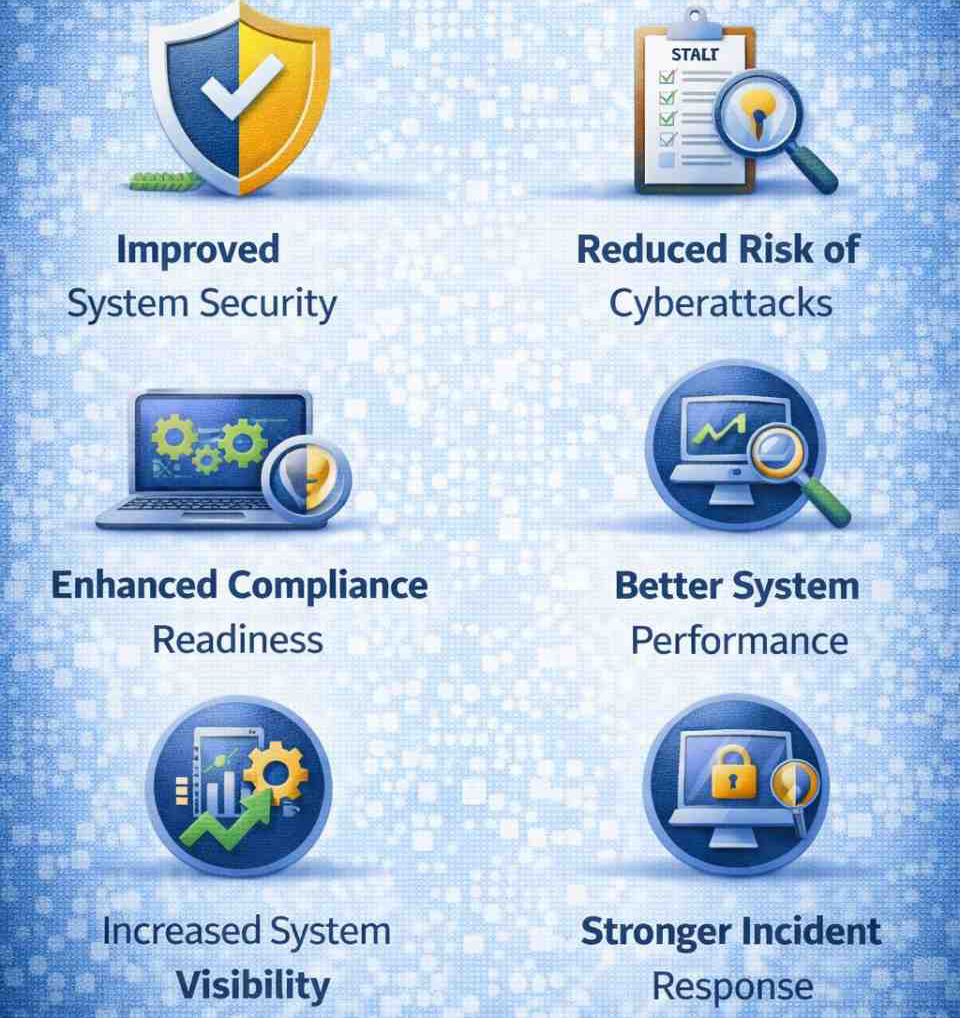
Implementing regular OS audits provides several advantages:

  • Improved system security and protection
  • Reduced risk of cyberattacks and breaches
  • Enhanced compliance readiness
  • Better system performance and stability
  • Increased visibility into system activities
  • Stronger incident response capabilities

Operating system audits help organizations proactively manage risks instead of reacting to incidents.

Frequently Asked Questions (FAQs)

It is a review of OS configurations, security controls, and system processes to ensure security and compliance.

It helps detect vulnerabilities, prevent unauthorized access, and maintain system integrity.

Tools include vulnerability scanners, log analyzers, and configuration management tools.

Typically annually, or more frequently depending on risk and compliance requirements.

Outdated patches, weak passwords, misconfigurations, and excessive user privileges.