
Firewall Audit

Firewall Audit


Firewalls act as the first line of defense in protecting an organization’s network from unauthorized access, cyber threats, and malicious traffic. However, simply having a firewall in place is not enough — it must be properly configured, continuously monitored, and regularly reviewed.

A Firewall Audit is a comprehensive assessment of firewall configurations, rules, and policies to ensure they are secure, optimized, and aligned with business and compliance requirements. It helps organizations evaluate whether their firewall is effectively controlling network traffic and protecting critical systems.

Firewall audits are essential for maintaining a strong security posture and ensuring that security controls remain effective against evolving threats.
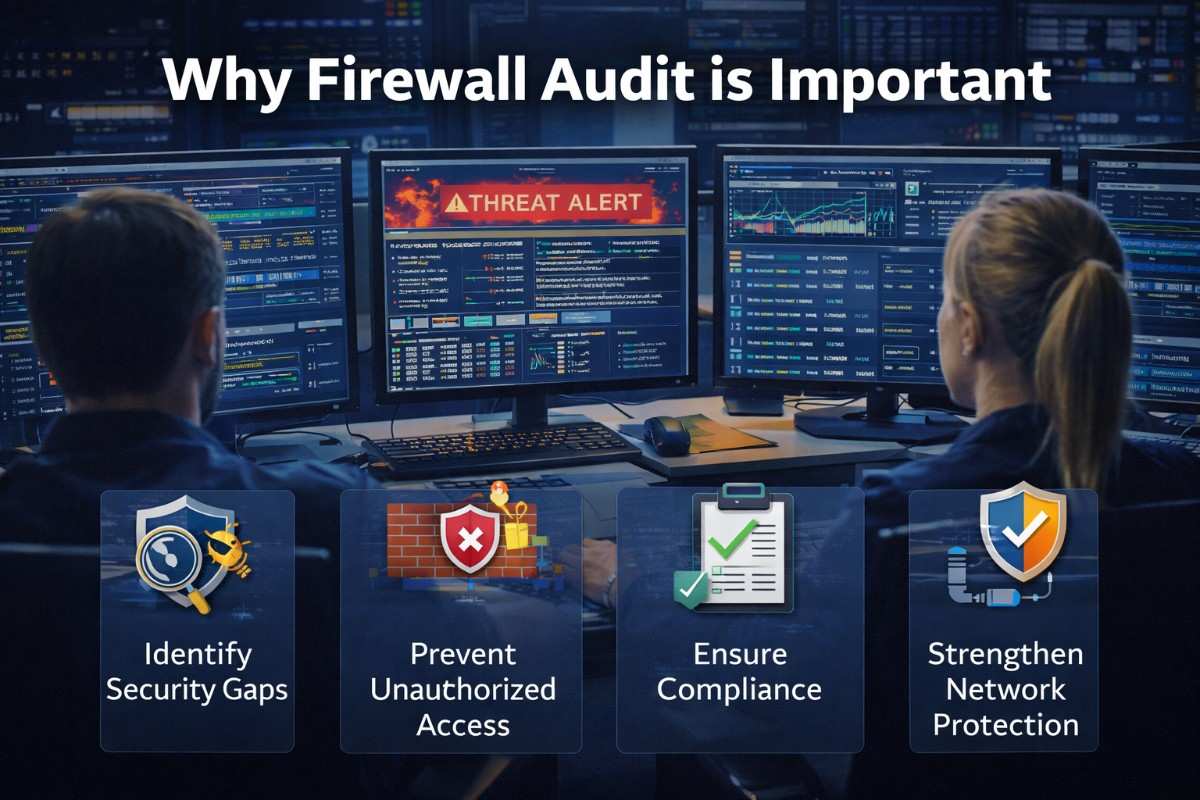
Why Firewall Audit is Important


Organizations rely heavily on firewalls to protect their networks, but misconfigurations or outdated rules can create serious vulnerabilities.

A firewall audit helps:

  • Identify vulnerabilities and misconfigurations
  • Ensure compliance with regulatory standards
  • Optimize firewall performance and rule efficiency
  • Prevent unauthorized access and data breaches
  • Strengthen overall network security

Regular audits also help organizations maintain visibility into firewall rules and detect security gaps before they can be exploited.

Firewall Audit
Firewall Audit

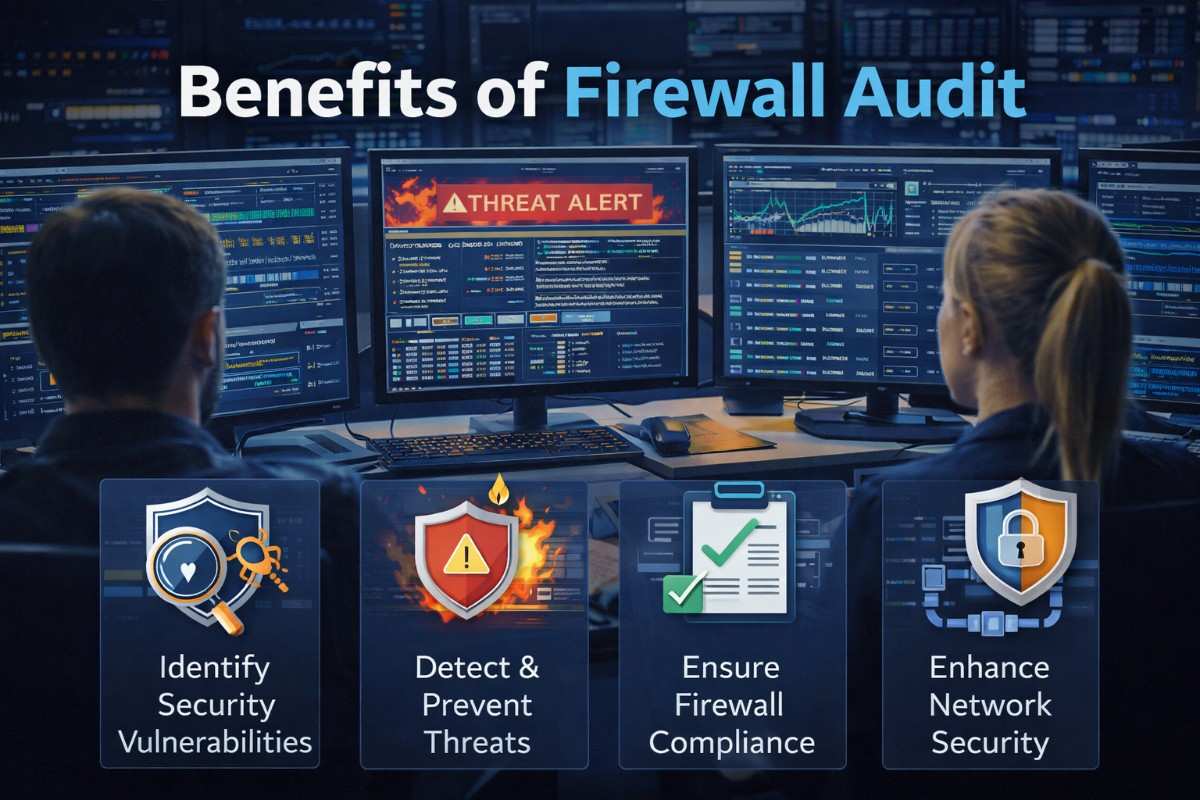
Benefits of Firewall Audit


Implementing regular firewall audits provides several advantages:

  • Improved network security and protection
  • Reduced risk of cyberattacks and data breaches
  • Enhanced compliance with regulations
  • Optimized firewall performance
  • Better visibility into network traffic
  • Strengthened incident response capabilities

Firewall audits help organizations proactively manage risks and maintain a secure IT environment.

Frequently Asked Questions (FAQs)

A firewall audit is a process of reviewing firewall configurations, rules, and policies to ensure security and compliance.

It helps identify vulnerabilities, improve security, and ensure compliance with regulatory standards.

Typically annually or more frequently depending on risk and compliance requirements.

Misconfigured rules, unused rules, overly permissive access, and outdated configurations.

Yes, it strengthens security by identifying and fixing vulnerabilities in firewall configurations.