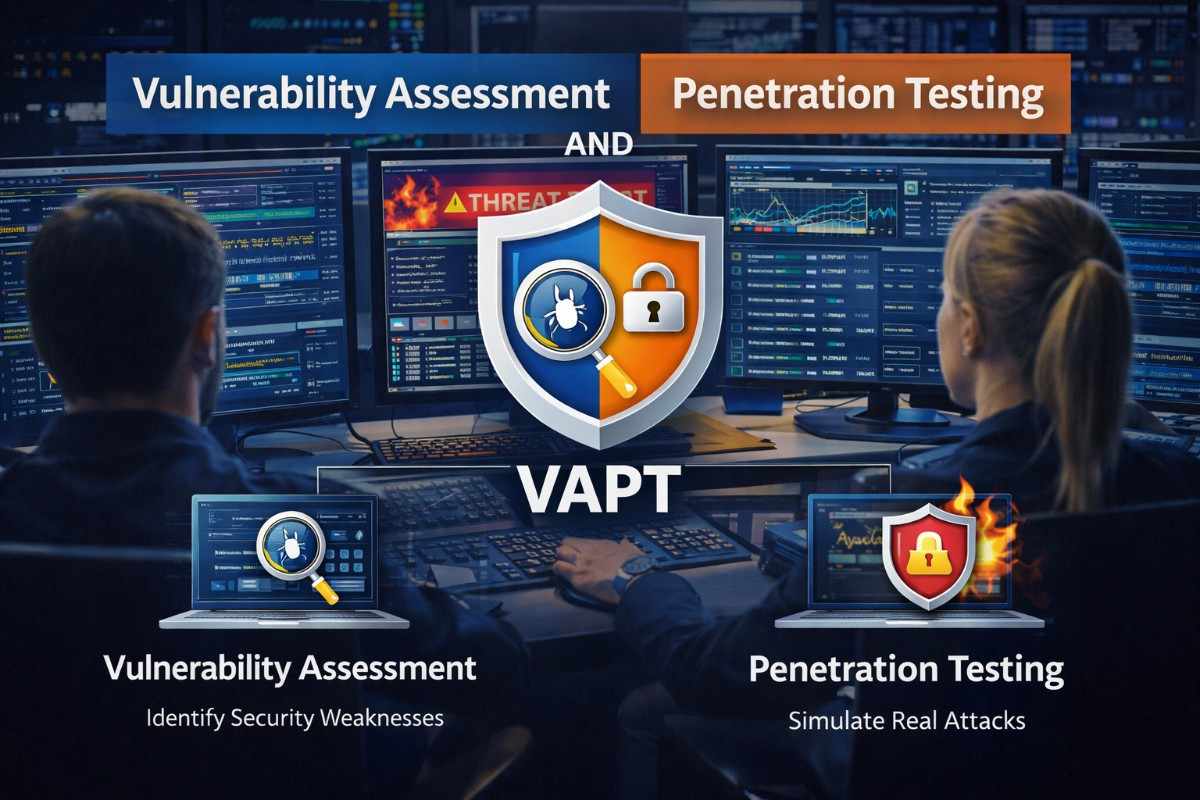
Vulnerability Assessment and Penetration Testing (VAPT)

Vulnerability Assessment and Penetration Testing (VAPT)


In today’s digital landscape, cyber threats are becoming more advanced and frequent. Organizations must take a proactive approach to identify and eliminate vulnerabilities before attackers exploit them.

Vulnerability Assessment and Penetration Testing (VAPT) is a comprehensive security testing methodology that helps organizations detect, analyze, and remediate security weaknesses across networks, applications, and systems. It combines automated scanning with real-world attack simulations to provide a complete view of an organization’s security posture.

VAPT is a critical component of modern cybersecurity strategies, enabling businesses to stay ahead of evolving threats and protect sensitive data.
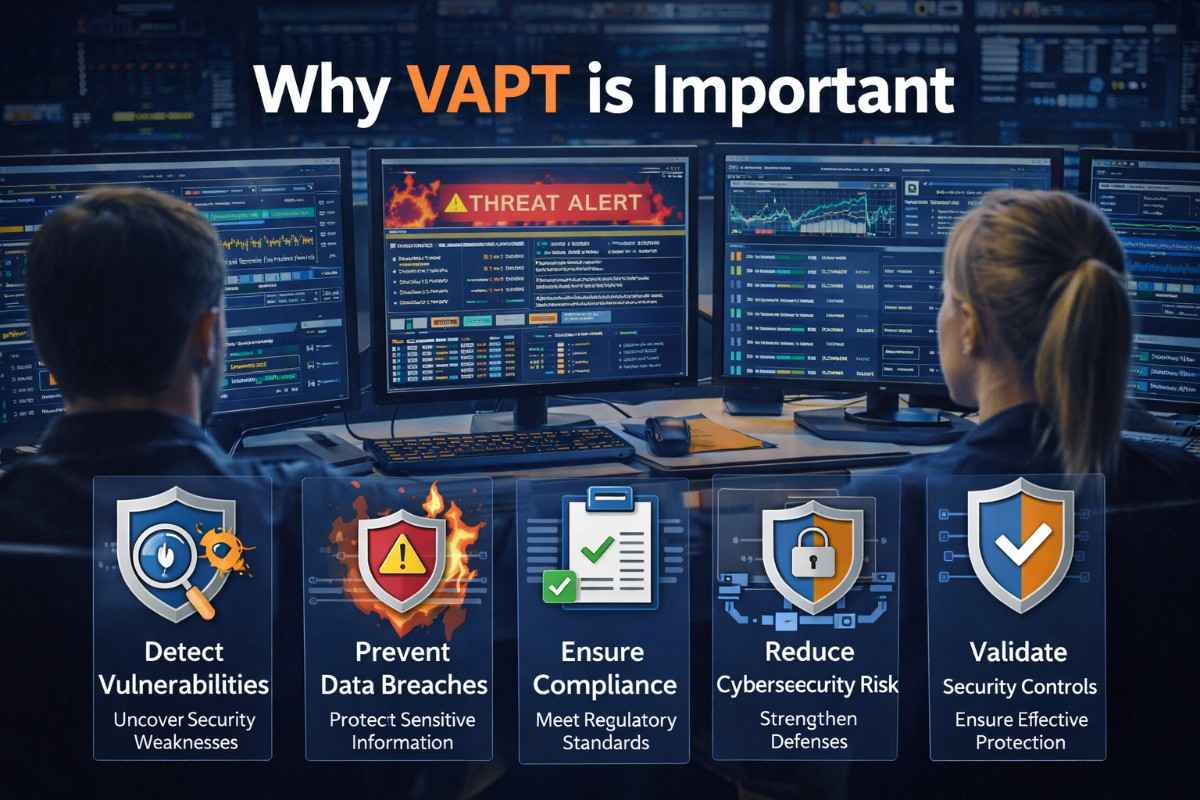
Why VAPT is Important


Cyberattacks can result in financial loss, data breaches, and reputational damage. VAPT helps organizations proactively identify risks before they turn into real threats.

Key reasons why VAPT is essential:

  • Detect vulnerabilities across systems, networks, and applications
  • Prevent unauthorized access and data breaches
  • Validate the effectiveness of existing security controls
  • Ensure compliance with regulatory standards
  • Strengthen overall cybersecurity posture

By identifying weaknesses early, organizations can reduce exposure and improve resilience against cyber threats.

Why VAPT is Important
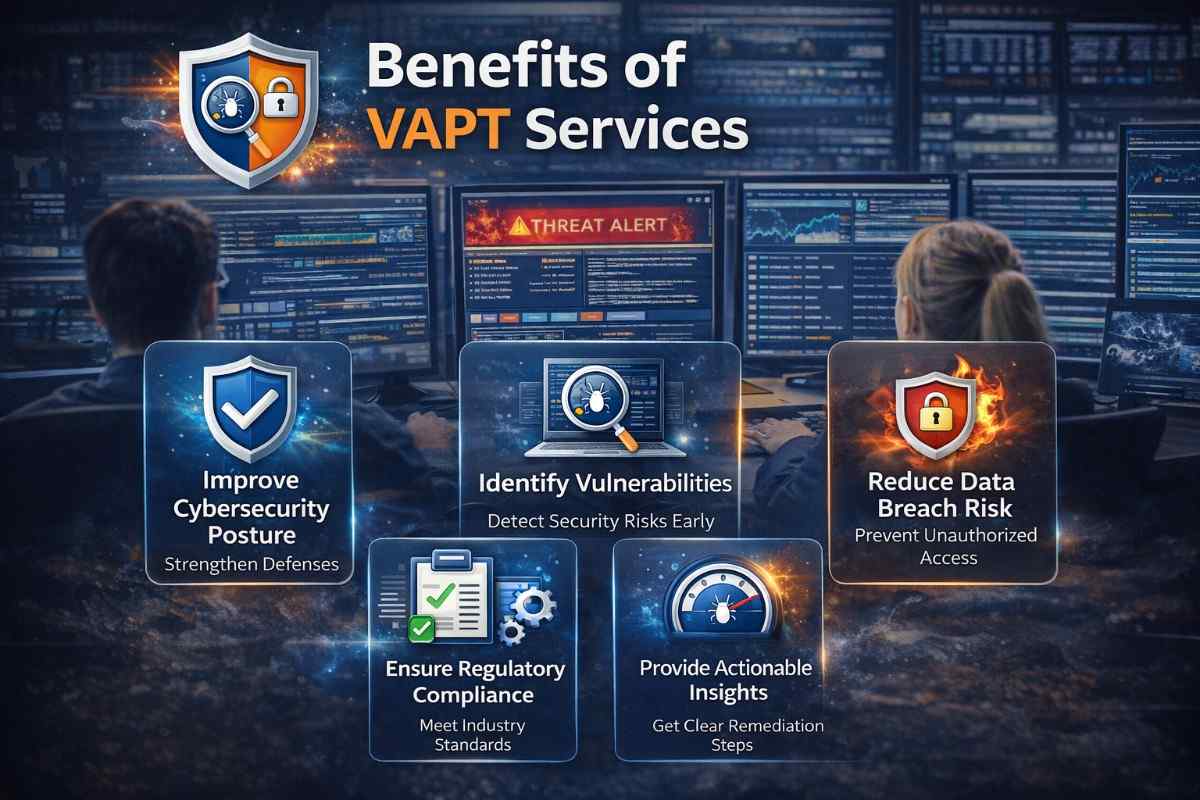
Benefits of VAPT Services

Benefits of VAPT Services


Implementing VAPT provides several advantages:

  • Improved cybersecurity posture
  • Early detection of vulnerabilities
  • Reduced risk of data breaches
  • Better compliance with regulations
  • Enhanced incident response capabilities
  • Increased customer trust and confidence

VAPT provides actionable insights that help organizations prioritize and fix critical risks effectively.

Frequently Asked Questions (FAQs)

VAPT is a combination of vulnerability assessment and penetration testing used to identify and fix security weaknesses.

It helps prevent cyberattacks by identifying vulnerabilities before attackers exploit them.

Typically annually or after major system changes.

VA identifies vulnerabilities, while PT tests how those vulnerabilities can be exploited.

Yes, many standards require regular security testing and vulnerability assessments.