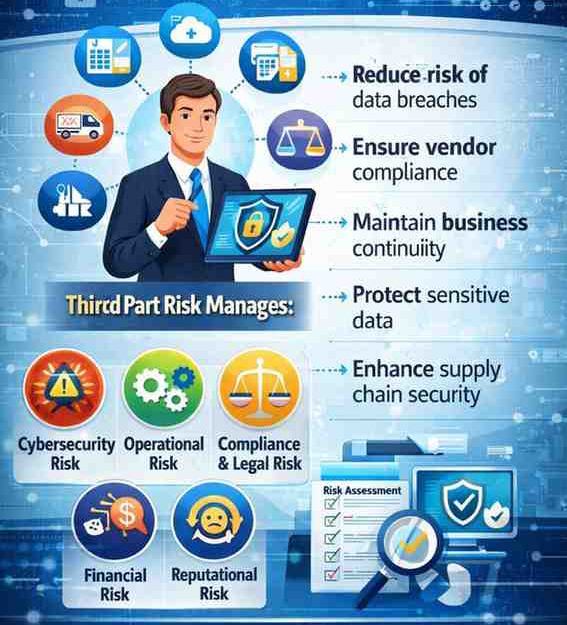
Third-Party Risk Management (TPRM) Services

Third-Party Risk Management (TPRM) Services


In today’s interconnected business environment, organizations increasingly rely on external vendors, suppliers, and service providers to support operations, technology, and business growth. While these partnerships bring efficiency and scalability, they also introduce significant risks that must be carefully managed.

Third-Party Risk Management (TPRM) is a structured approach used to identify, assess, monitor, and mitigate risks associated with external parties such as vendors, contractors, and partners. It ensures that third parties operate securely, comply with regulations, and do not expose the organization to unnecessary threats.

A robust TPRM program helps organizations maintain control over their extended ecosystem and protect critical assets, data, and reputation.
Why Third-Party Risk Management is Important


As businesses expand their digital and operational ecosystems, third-party relationships become a major source of risk exposure.

Effective TPRM helps organizations:

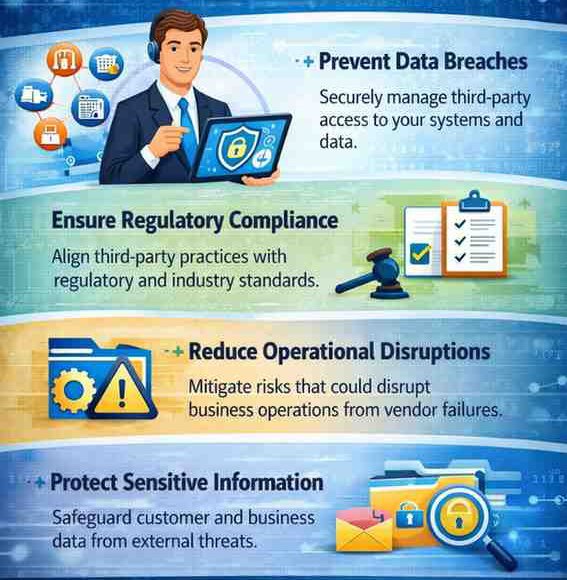
  • Prevent data breaches caused by third-party vulnerabilities
  • Ensure compliance with regulatory requirements
  • Protect sensitive business and customer data
  • Reduce operational disruptions from vendor failures
  • Maintain brand reputation and trust
  • Strengthen supply chain security

Third parties often have access to internal systems and sensitive information, making them potential entry points for cyberattacks and operational risks.

Why Third-Party Risk Management is Important
Benefits of Third-Party Risk Management

Benefits of Third-Party Risk Management


Implementing a strong TPRM framework provides several business advantages:

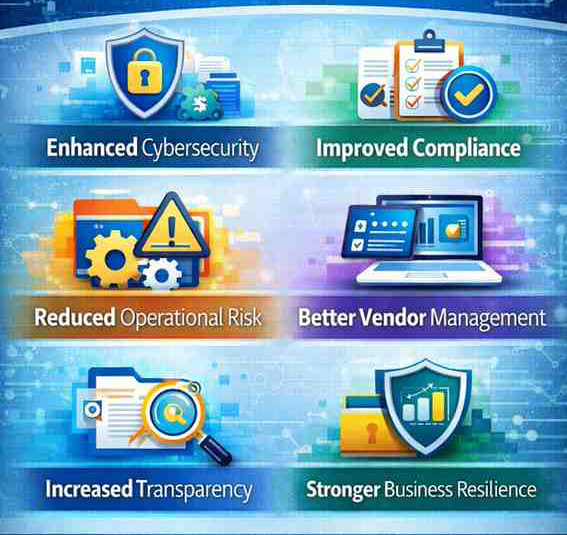
  • Enhanced cybersecurity and data protection
  • Improved regulatory compliance
  • Reduced operational and financial risks
  • Better vendor performance management
  • Increased transparency and accountability
  • Stronger business resilience

TPRM enables organizations to proactively manage risks and maintain control over external partnerships.

Frequently Asked Questions (FAQs)

It is the process of identifying, assessing, and mitigating risks associated with external vendors and partners.

It helps prevent data breaches, ensures compliance, and protects business operations from vendor-related risks.

Vendor assessment, risk scoring, compliance checks, monitoring, and risk mitigation strategies.

Regularly—typically annually or based on risk level and business criticality.

Vendor management focuses on performance and relationships, while TPRM focuses on risk and security.