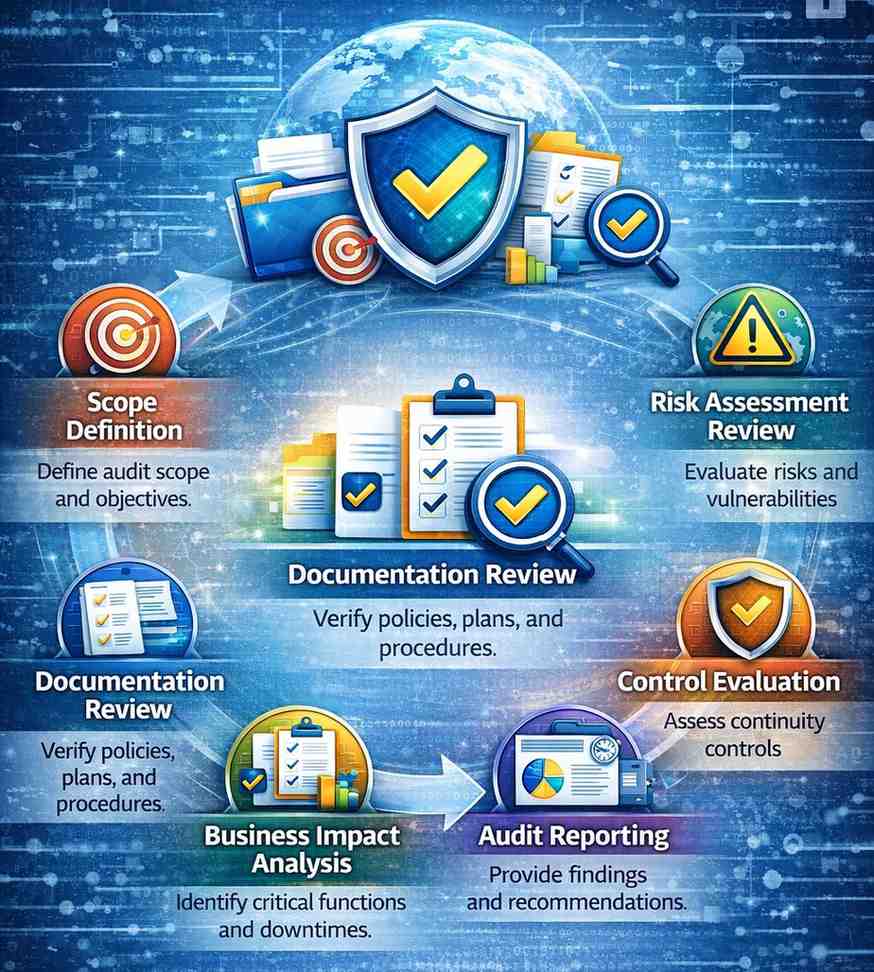
ISO 22301 Audit

ISO 22301 Audit


In an increasingly unpredictable business environment, organizations must be prepared to handle disruptions such as cyber incidents, natural disasters, system failures, and supply chain interruptions. Ensuring operational continuity is critical, and this is where ISO 22301 Audit plays a vital role.

An ISO 22301 Audit evaluates an organization’s Business Continuity Management System (BCMS) to determine whether it meets the requirements of the ISO 22301 standard. This international standard provides a structured framework for planning, implementing, maintaining, and improving business continuity processes.

The audit ensures that organizations are capable of minimizing disruption impact and recovering operations efficiently.
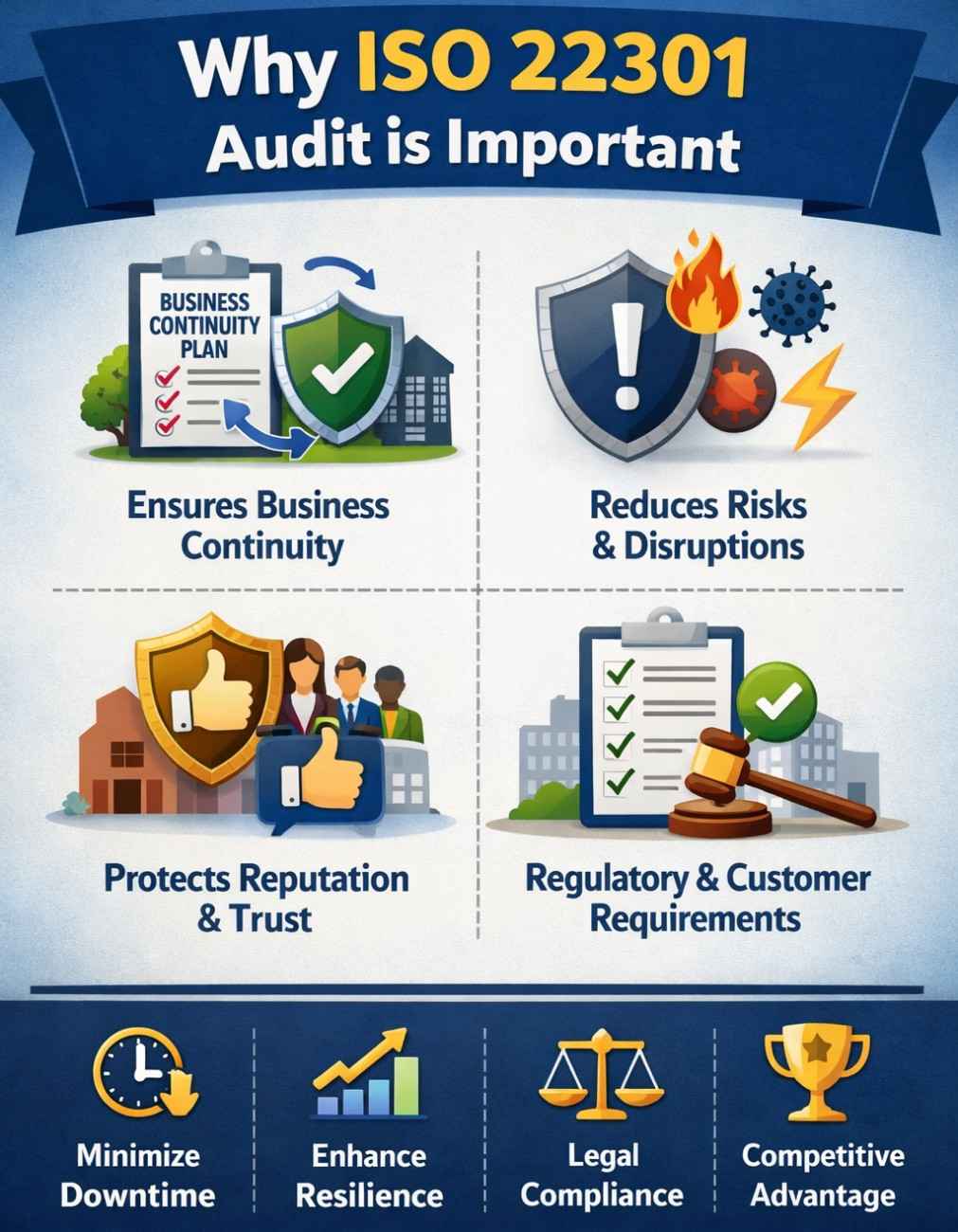
Why ISO 22301 Audit is Important


An ISO 22301 audit is essential for validating the effectiveness of your business continuity framework.

It helps organizations:

  • Ensure compliance with international standards
  • Identify gaps in business continuity processes
  • Improve operational resilience
  • Reduce downtime and financial losses
  • Strengthen stakeholder confidence
  • Enhance incident response capabilities

Regular audits ensure that business continuity plans remain effective and aligned with evolving risks and business changes.

Why ISO 22301 Audit is Important
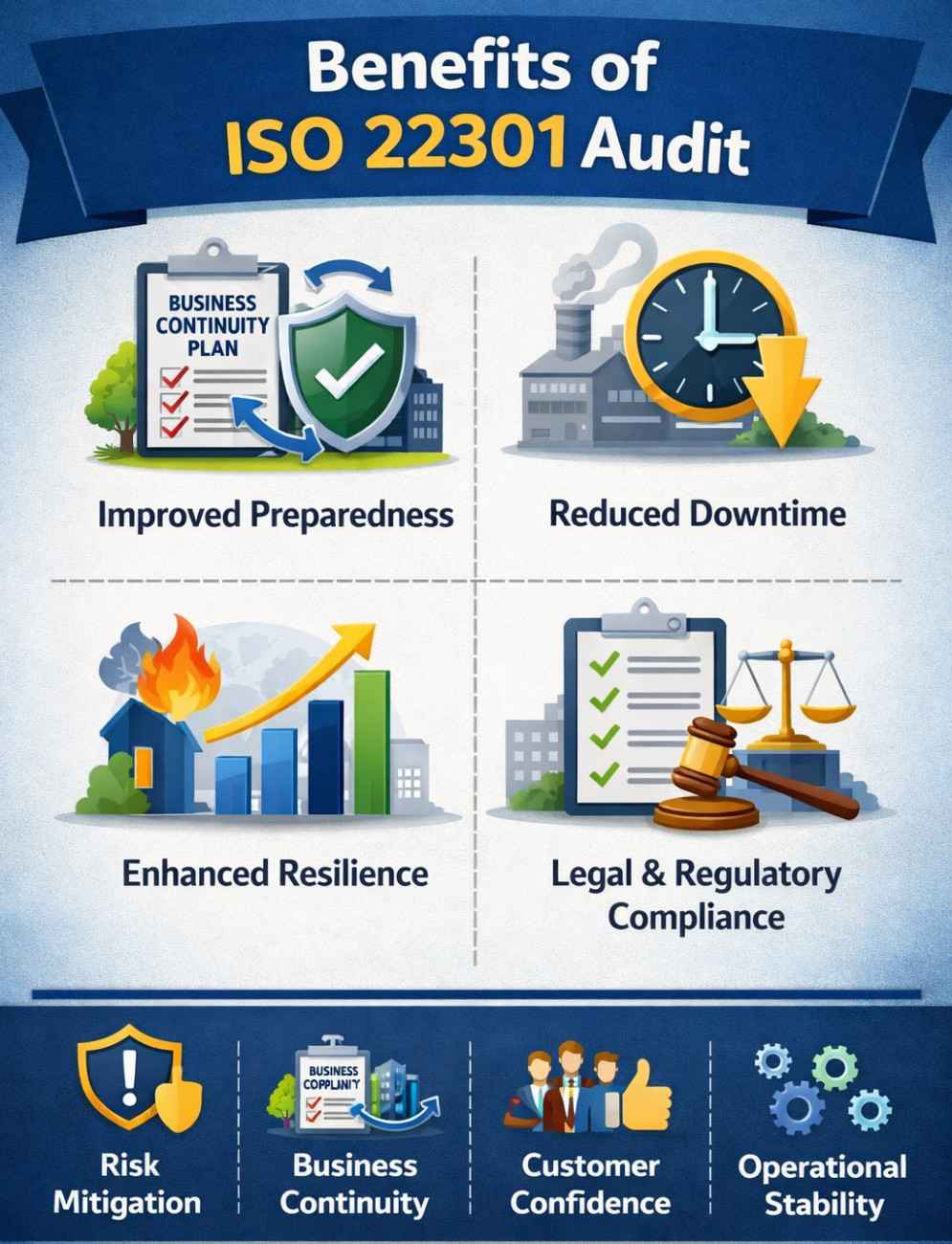
Benefits of ISO 22301 Audit

Benefits of ISO 22301 Audit


Conducting ISO 22301 audits offers significant advantages:

  • Improved business resilience
  • Reduced operational disruptions
  • Faster recovery from incidents
  • Enhanced regulatory compliance
  • Increased customer and stakeholder trust
  • Competitive advantage in the market

Organizations that implement ISO 22301 demonstrate their ability to handle disruptions efficiently and maintain service continuity.

Frequently Asked Questions (FAQs)

An ISO 22301 audit evaluates an organization’s business continuity management system to ensure compliance with ISO standards.

No, it is voluntary, but often required by clients or regulators in certain industries.

The duration depends on organization size and complexity, typically ranging from a few days to weeks.

Non-conformities are identified, and corrective actions must be implemented before certification.

Internal audits are typically conducted annually, while certification audits follow a three-year cycle.