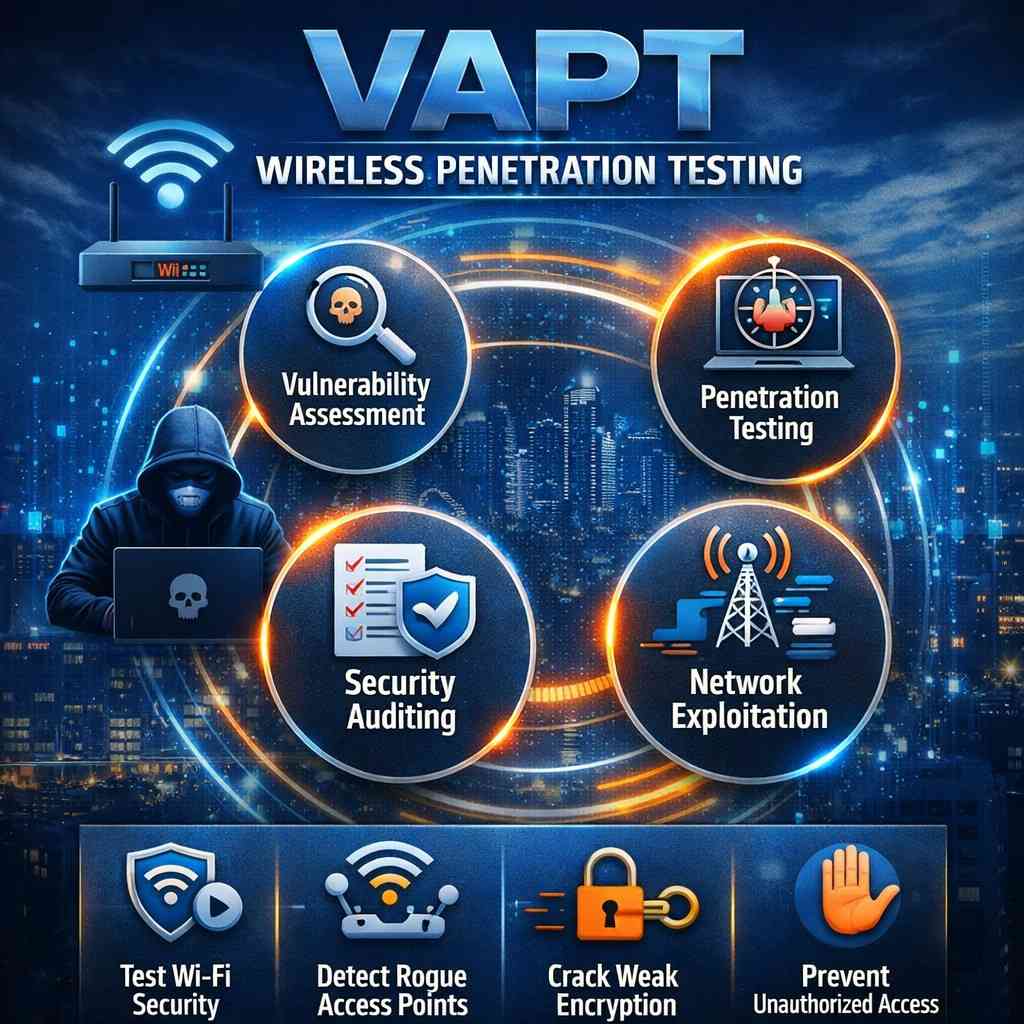
VAPT Wireless Penetration Testing

VAPT Wireless Penetration Testing


Wireless networks are an essential part of modern business operations, enabling seamless connectivity across offices, campuses, and remote environments. However, unlike wired networks, wireless communication operates over open air, making it highly susceptible to cyberattacks, unauthorized access, and data interception.

Wireless Penetration Testing (Wireless VAPT) is a specialized security assessment that evaluates the security of Wi-Fi networks and wireless infrastructure. It combines Vulnerability Assessment and Penetration Testing (VAPT) techniques to identify weaknesses and simulate real-world attacks on wireless networks.

By proactively testing wireless environments, organizations can detect vulnerabilities and strengthen their defenses before attackers exploit them.
Why Wireless Penetration Testing is Important


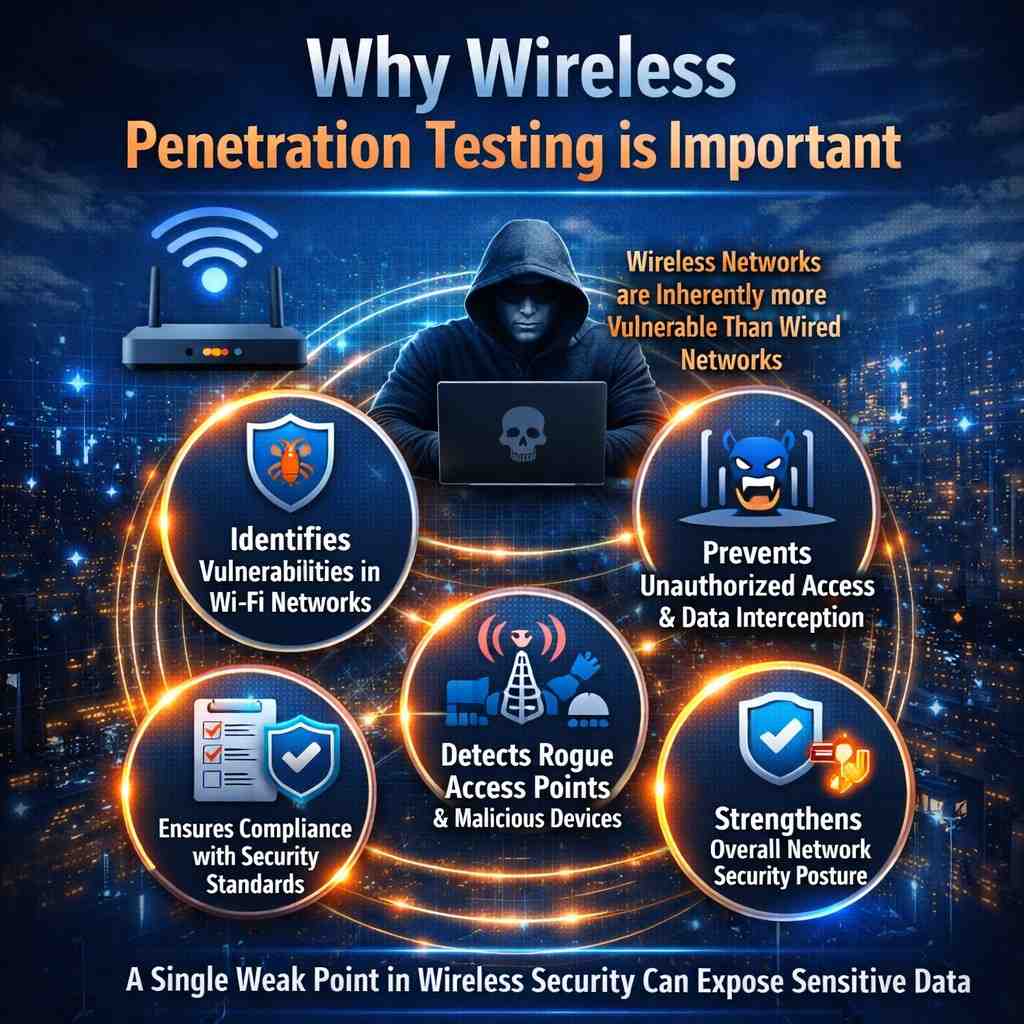
Wireless networks are inherently more vulnerable than wired networks because signals can be intercepted within range. Without proper security, attackers can gain access to sensitive data and internal systems.

Wireless penetration testing is important because it:

  • Identifies vulnerabilities in Wi-Fi networks and configurations
  • Prevents unauthorized access and data interception
  • Detects rogue access points and malicious devices
  • Ensures compliance with security standards
  • Strengthens overall network security posture

A single weak point in wireless security can expose sensitive data, making regular testing essential.

Why Wireless Penetration Testing is Important
Benefits of Wireless Penetration Testing

Benefits of Wireless Penetration Testing


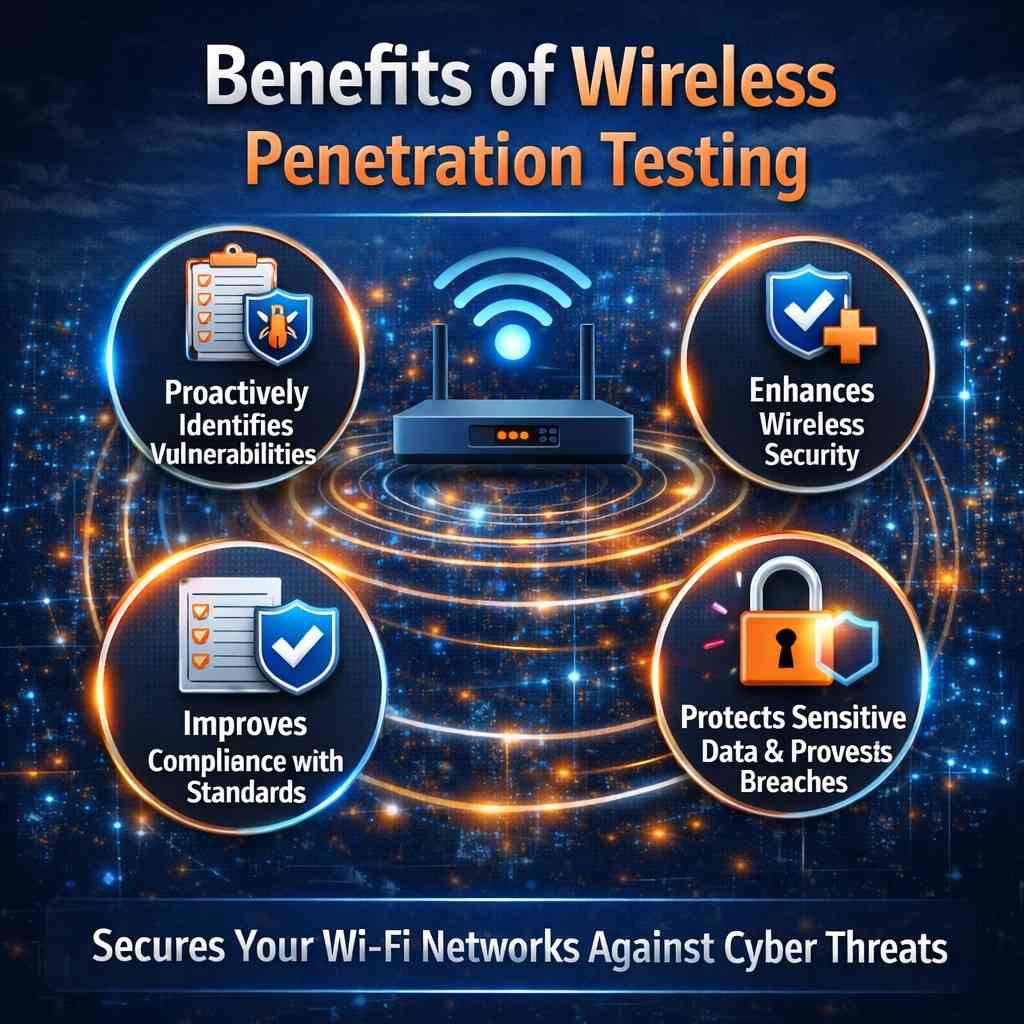
Implementing wireless VAPT provides several advantages:

  • Early detection of vulnerabilities
  • Reduced risk of data breaches
  • Improved network security posture
  • Enhanced compliance with regulations
  • Better visibility into wireless risks
  • Increased user and customer trust

Regular testing ensures wireless networks remain secure and resilient against evolving threats.

Frequently Asked Questions (FAQs)

It is a process of testing wireless networks to identify vulnerabilities and simulate real-world attacks.

Because wireless networks are easily accessible and vulnerable to interception and unauthorized access.

Tools like Aircrack-ng, Wireshark, and Kismet are commonly used.

Typically annually or after major network changes.

Weak encryption, rogue access points, and misconfigured networks.