Database Security Testing

Database Security Testing


Databases are the core of modern digital systems, storing critical business information, customer data, financial records, and operational insights. Because of the sensitive nature of this data, databases are prime targets for cyberattacks, unauthorized access, and data breaches.

Database Security Testing is a systematic process of evaluating database systems to identify vulnerabilities, misconfigurations, and security risks. It ensures that sensitive data is protected against unauthorized access, corruption, and loss.

A well-executed database security testing strategy helps organizations safeguard data, maintain compliance, and strengthen overall cybersecurity posture.
Why Database Security Testing is Important


Databases hold highly sensitive and valuable information, making them attractive targets for attackers. Even a small vulnerability can lead to serious consequences such as data breaches, financial loss, and reputational damage.

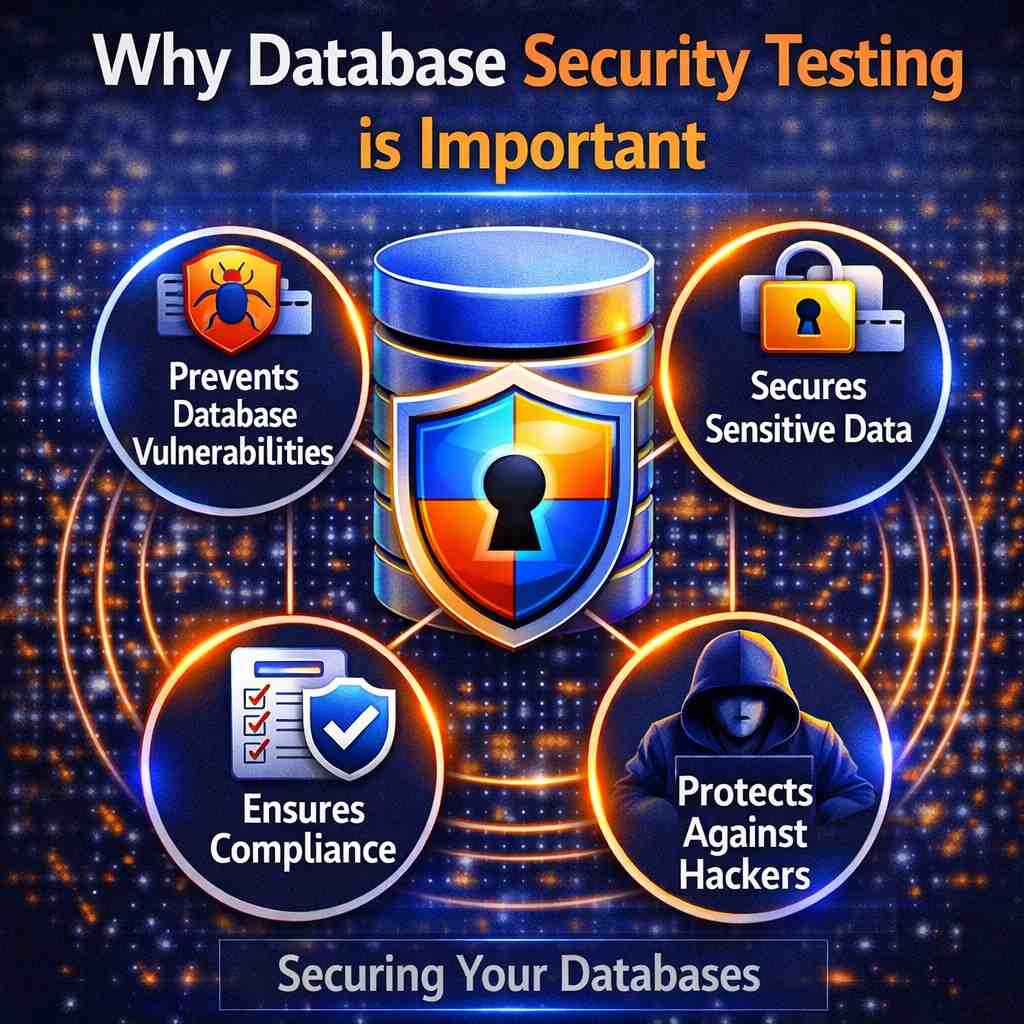
Database security testing is important because it:

  • Identifies vulnerabilities and security weaknesses
  • Prevents unauthorized access and data breaches
  • Ensures data confidentiality, integrity, and availability
  • Strengthens overall database security posture
  • Helps meet compliance and regulatory requirements

Regular testing helps organizations detect and mitigate risks before attackers exploit them.

Why Database Security Testing is Important
Benefits of Database Security Testing

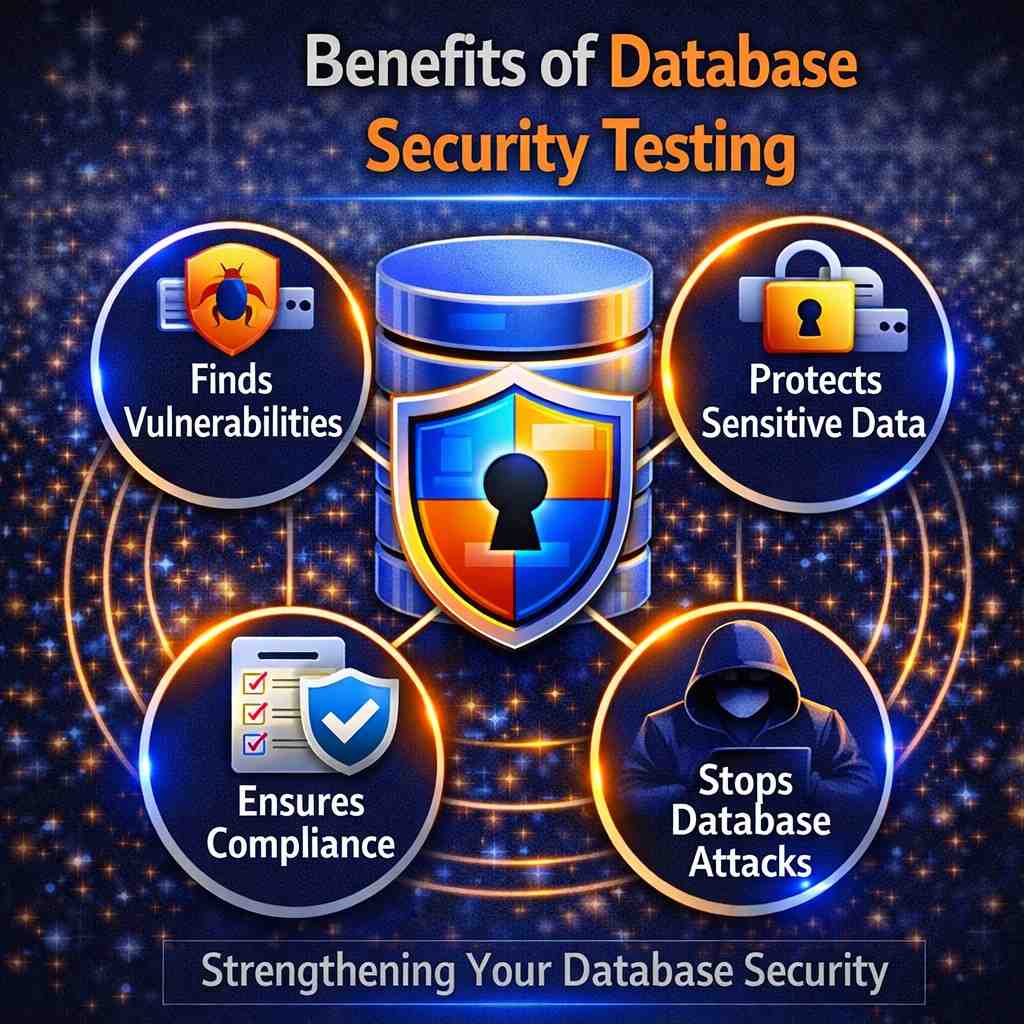
Benefits of Database Security Testing


Implementing database security testing provides several advantages:

  • Early detection of vulnerabilities
  • Reduced risk of data breaches
  • Improved compliance with regulations
  • Enhanced data protection and privacy
  • Better system performance and reliability
  • Increased trust and credibility

Testing helps organizations proactively manage risks and protect critical data assets.

Frequently Asked Questions (FAQs)

It is the process of identifying and fixing vulnerabilities in database systems to protect data from threats.

Because databases store sensitive information that must be protected from unauthorized access and cyberattacks.

SQL injection, weak authentication, misconfigurations, and privilege misuse.

Regularly—typically annually or after major changes.

Yes, it helps optimize configurations and ensures system stability.